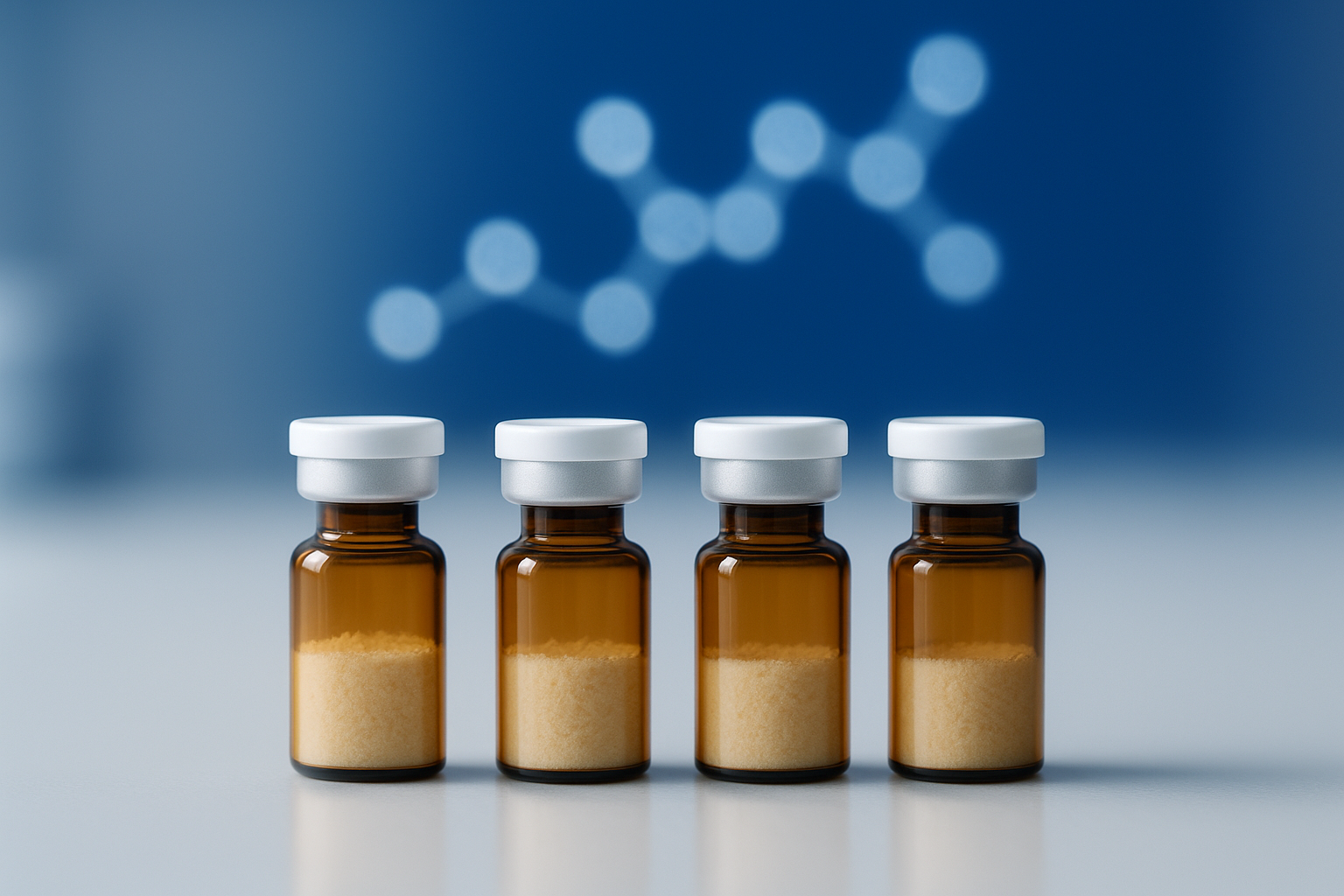

A COA is the single most useful document for judging research-peptide quality. Here's how to actually read one — purity, identity, and the numbers that matter.
When you buy a research peptide, the price and the label tell you almost nothing about what's really in the vial. The Certificate of Analysis (COA) does. A COA is a batch-specific lab report that documents the identity and purity of the exact material you received — not a generic claim, but a test of that production lot.
Despite that, COAs are routinely ignored or, worse, faked. Knowing how to read one separates a serious supplier from a reseller hoping you won't look too closely.
Purity: the HPLC number
Purity is measured by High-Performance Liquid Chromatography (HPLC). The sample is pushed through a column that separates the target peptide from related impurities — truncated sequences, deletion peptides, and synthesis by-products. The detector plots these as peaks, and purity is reported as the area of the main peak as a percentage of all peaks.
A result of "99% by HPLC" means the dominant peak accounts for at least 99% of the detected material. Look for the actual chromatogram, not just a number on a line. A clean trace shows one tall, sharp peak with minimal baseline noise; a suspect one has several smaller peaks the seller would rather you didn't add up.
Identity: mass spectrometry
Purity tells you how much of one thing is in the vial — it doesn't tell you it's the right thing. That's what mass spectrometry (MS) confirms. MS measures the molecular weight of the peptide and compares it to the theoretical weight of the intended sequence. If the observed mass matches the expected mass, you have confirmation of identity.
A complete COA pairs both: HPLC for purity, MS for identity. One without the other is half a report.
What to check before you trust it
- Does the batch / lot number on the COA match the number printed on your vial? If it doesn't, the COA isn't for your material.
- Is the test date recent and tied to the production lot?
- Is there an actual HPLC chromatogram and MS spectrum — not just typed numbers?
- Is the testing lab named, and is it independent of the seller?
A purity claim without a batch-matched chromatogram is marketing. A batch-matched COA with HPLC and MS is evidence.
Why batch-specific matters
Synthesis varies between runs. A supplier who tested one batch two years ago and shows that same PDF for everything since is telling you nothing about your vial. Reputable suppliers test each lot rather than reusing one old report. At UKPeptides every batch is tested by an independent third-party laboratory before it is released for sale.
For research use only. This article is educational and does not describe human, clinical or veterinary use.
Written and reviewed to our editorial standards. Explore the research peptide catalog or read more in Research Notes.
For research use only · Not for human or veterinary use