
The incretin field has moved from single-receptor agonists to dual and triple agonists in a few short years. Here is how the main research peptides actually differ.
Few areas of peptide research have moved as fast as the incretin field. In the space of a decade it has gone from single-receptor agonists to carefully balanced triple agonists, and the catalogue now reflects that. This guide maps the main GLP-1 research peptides onto the receptors they engage, so you can tell them apart at a glance — strictly for in-vitro, research use only.
The three receptors that matter
Almost every compound in this class is described by which of three gut-hormone receptors it activates:
- GLP-1 receptor — the original incretin target, central to glucose-dependent insulin signalling models.
- GIP receptor — glucose-dependent insulinotropic polypeptide; adding it to GLP-1 activity is what defines the "dual agonists".
- Glucagon receptor — adding this third arm is what defines the "triple agonists", and it is studied for its effect on energy-expenditure pathways.
Read any datasheet in this class and it will tell you which combination of these three it hits. That combination is the single most useful way to classify the compound.
Single, dual and triple agonists

- Semaglutide — a long-acting GLP-1 receptor agonist, engineered with an albumin-binding side chain that stretches its plasma residence to roughly a week. The most-cited GLP-1 analog in the recent literature.
- Tirzepatide — a GIP + GLP-1 dual agonist, among the most-studied incretin compounds in metabolic-pathway research.
- [Mazdutide](/catalog/mazdutide) — a GLP-1 + glucagon dual agonist built on an oxyntomodulin scaffold, frequently used to isolate the glucagon arm from GIP activity.
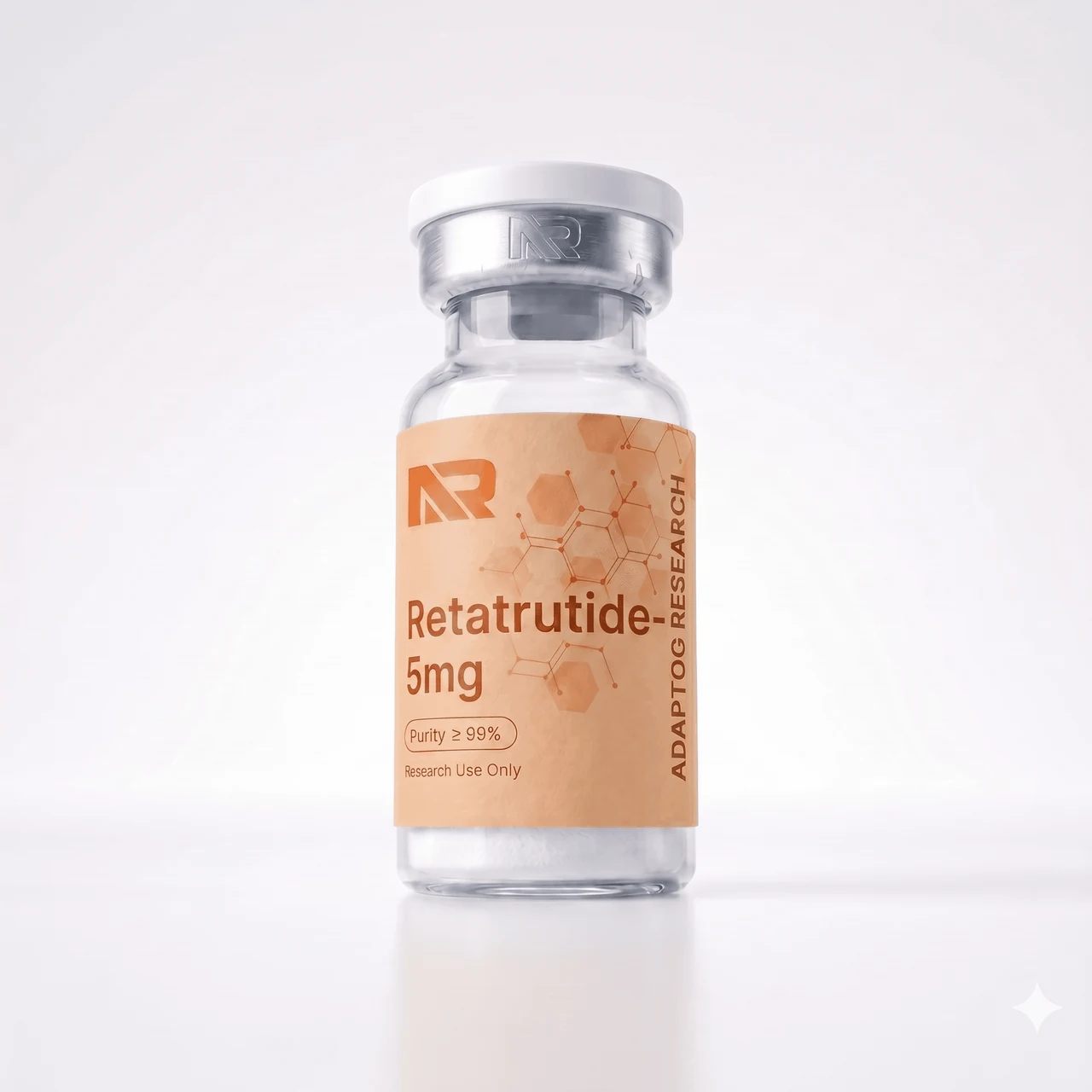
- [Retatrutide](/catalog/retatrutide) — a GIP + GLP-1 + glucagon triple agonist, reported among the most potent incretin compounds in the literature.
Lining them up this way shows the logic of the field: each step adds a receptor, and researchers compare the combinations to understand what each arm contributes.
Why purity matters even more here
These are large, complex peptides — retatrutide and mazdutide both run past 4,600 g/mol — and longer sequences give synthesis more chances to go wrong. That makes the Certificate of Analysis non-negotiable: HPLC for purity, mass spectrometry for identity, matched to the batch in your hand. UKPeptides releases this class at 99% HPLC-verified purity.
Handling notes
All of these ship lyophilised and dissolve best when bacteriostatic water is added slowly and the vial is swirled rather than shaken; the larger peptides can take a few minutes to go fully into solution. The peptide reconstitution calculator will set your concentration from the vial size and water volume.
Choosing for a comparison study
If the research question is about isolating a single receptor's contribution, the single- and dual-agonists give cleaner controls. If it is about combined or balanced agonism, the triple agonist is the reference point. Many labs stock more than one precisely so they can run them side by side.
For research use only. This article is educational and does not describe human, clinical or veterinary use.
Written and reviewed to our editorial standards. Explore the research peptide catalog or read more in Research Notes.
For research use only · Not for human or veterinary use