The peptide bond is the single chemical link that turns a row of amino acids into a peptide. Understanding it explains a lot about how peptides behave.
Every peptide in the catalogue, from a three-residue tripeptide to a forty-residue analog, is held together by the same piece of chemistry: the peptide bond. It is worth understanding, because almost everything about how a peptide is made, stored and tested traces back to this one linkage.
What a peptide bond is
A peptide bond is an amide bond formed between two amino acids. Specifically, the carboxyl group (–COOH) of one amino acid reacts with the amino group (–NH₂) of the next. The two join, a molecule of water is released, and the result is a covalent C–N link with the shape –C(=O)–NH–.
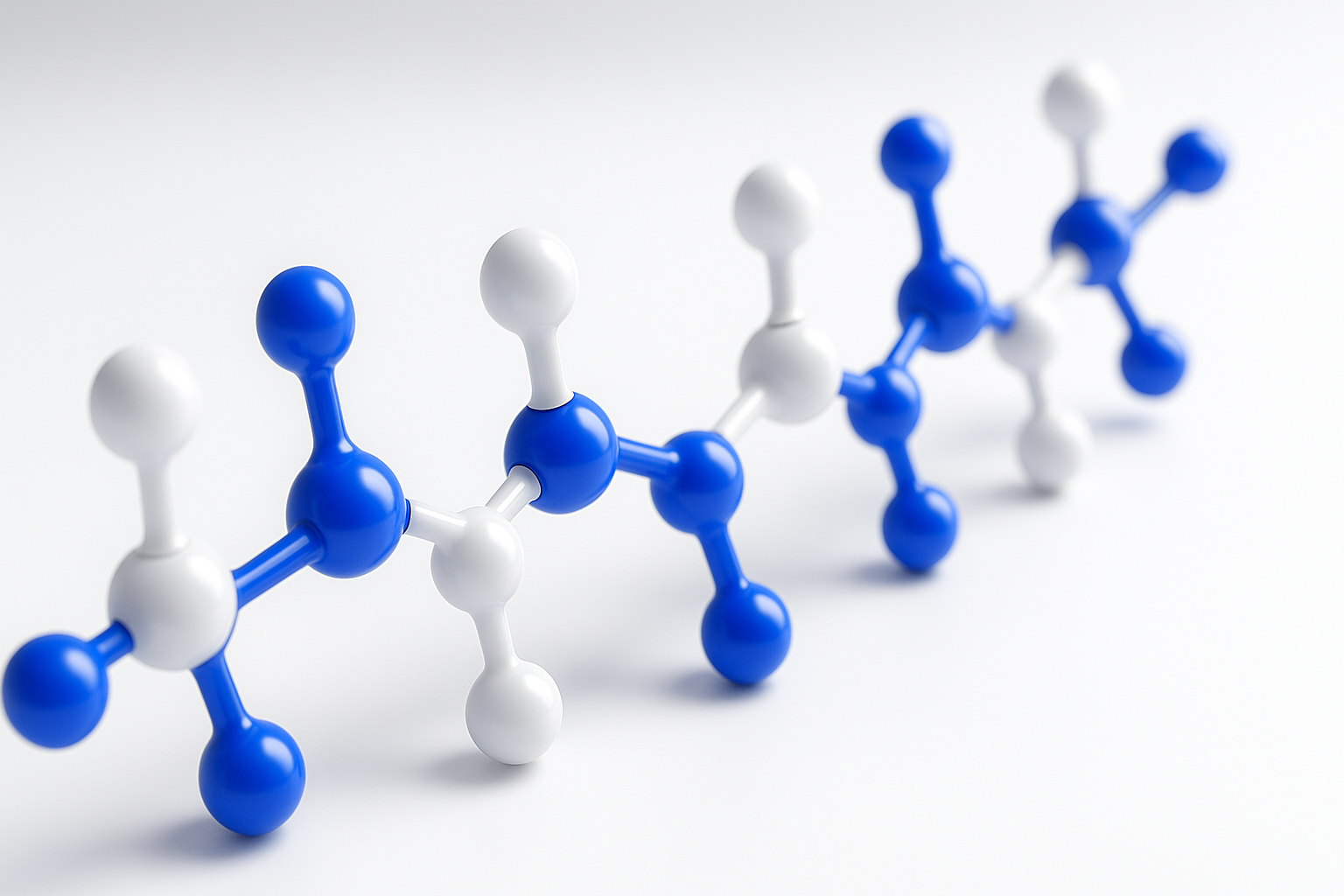
Because a water molecule leaves during the reaction, this is called a condensation (or dehydration) reaction. Run it again and again, residue after residue, and you build a chain: a dipeptide, a tripeptide, an oligopeptide, and eventually a full peptide or protein.
Why the bond is so stable
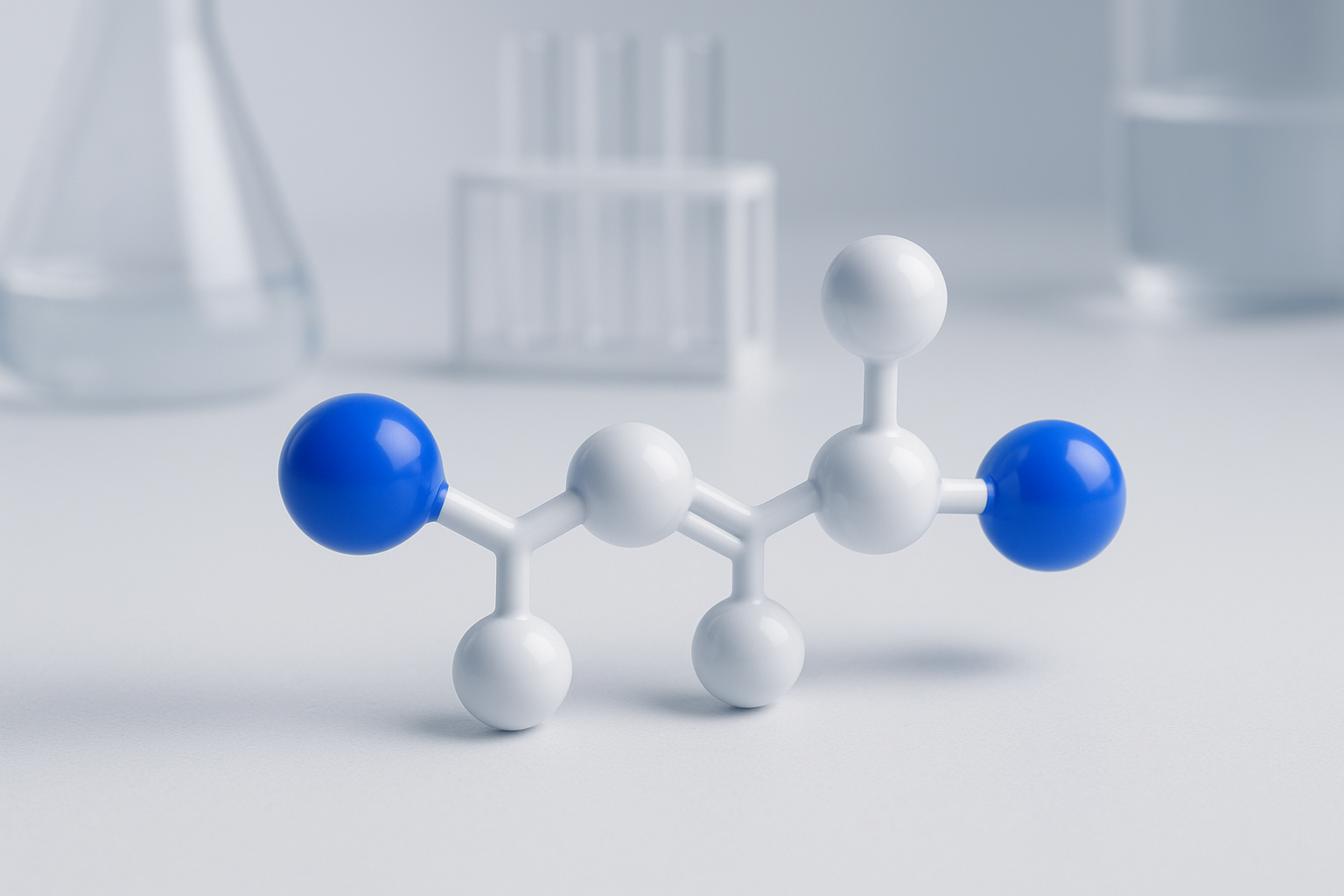
The peptide bond has partial double-bond character. The lone pair of electrons on the nitrogen is shared into the carbonyl, which means the bond does not rotate freely — the six atoms around it sit in a rigid, planar arrangement. That rigidity is one reason peptides hold a defined backbone shape, and why the bond resists spontaneous breakdown under normal conditions.
Hydrolysing a peptide bond — adding the water back to split the chain — generally requires strong acid, strong base, or a specific enzyme (a protease). This stability is exactly why lyophilised peptides keep so well in dry storage.
Primary structure and why order matters
The sequence of amino acids joined by these bonds is a peptide's primary structure. Sequence is everything: the same set of amino acids in a different order is a different peptide with different behaviour. This is why mass spectrometry, which confirms molecular weight against the intended sequence, is part of any serious Certificate of Analysis — it is checking that the right residues were joined in the right order.
Why this matters for purity
Solid-phase peptide synthesis builds a chain one residue at a time, forming one peptide bond per cycle. Each cycle is efficient but not perfect, so longer peptides accumulate more chances for a step to fail — producing truncated or deletion sequences. Those by-products are what an HPLC purity figure measures against the target. The chemistry of the peptide bond, in other words, is the reason purity testing exists at all.
Understanding the bond makes the rest of peptide handling read like common sense: keep them dry and cold to protect the chain, reconstitute gently to avoid damaging the structure, and always check the sequence was built correctly before you trust the vial.
For research use only. This article is educational and does not describe human, clinical or veterinary use.
Written and reviewed to our editorial standards. Explore the research peptide catalog or read more in Research Notes.
For research use only · Not for human or veterinary use