What BPC-157 is, the research models it's studied in, why 99% HPLC purity matters, and what to look for when sourcing it in the UK — for in-vitro research use only.
BPC-157 is one of the most widely studied peptides in laboratory research today. This guide explains what it is, why purity matters, and what UK research teams should look for when sourcing it — strictly for in-vitro, research use only.
What is BPC-157?
BPC-157 is a synthetic pentadecapeptide — a chain of 15 amino acids (sequence GEPPPGKPADDAGLV) derived from a partial sequence of the gastric protein known as Body Protection Compound. It has been characterised in the scientific literature for more than two decades, primarily in soft-tissue, vascular and cytoprotective signalling models.
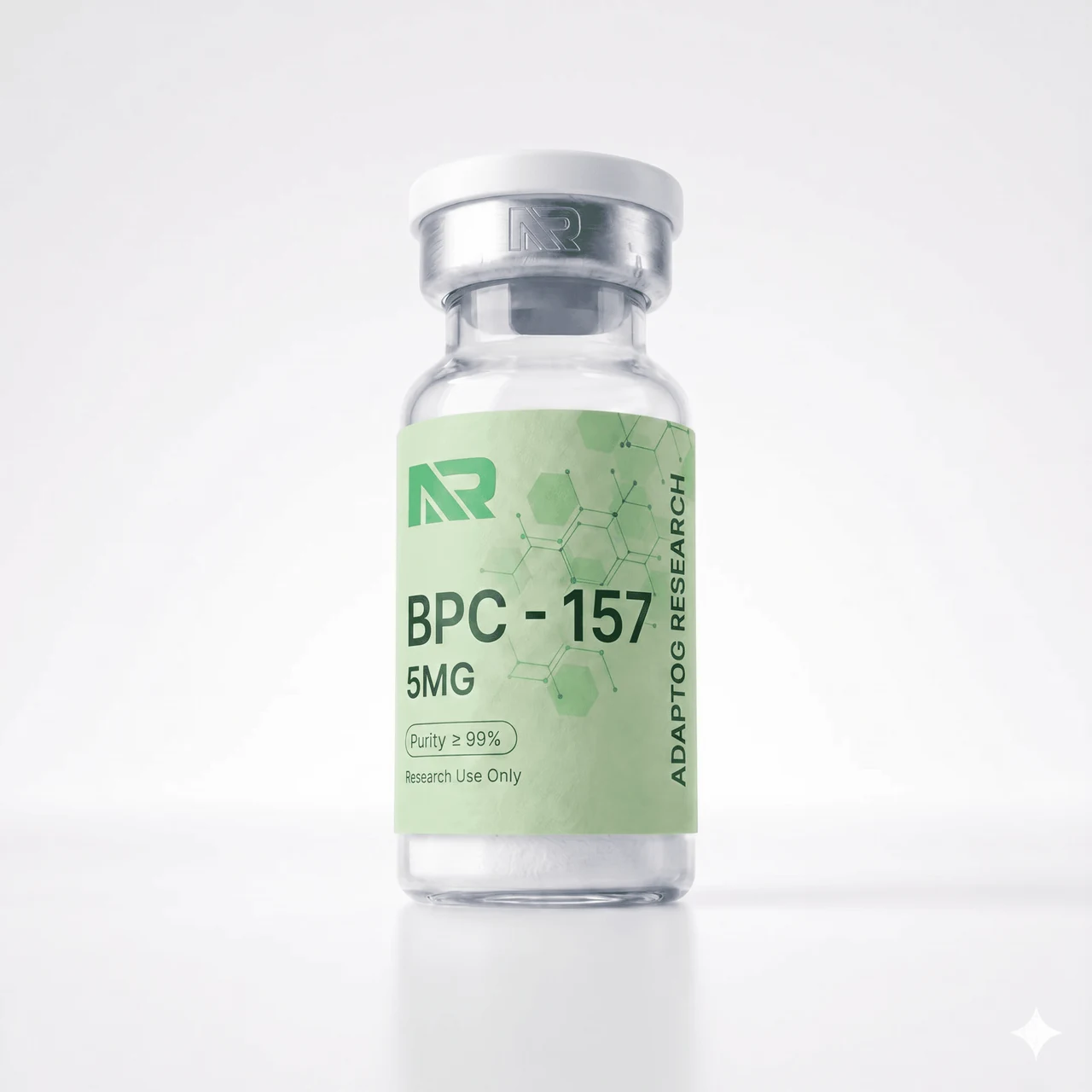
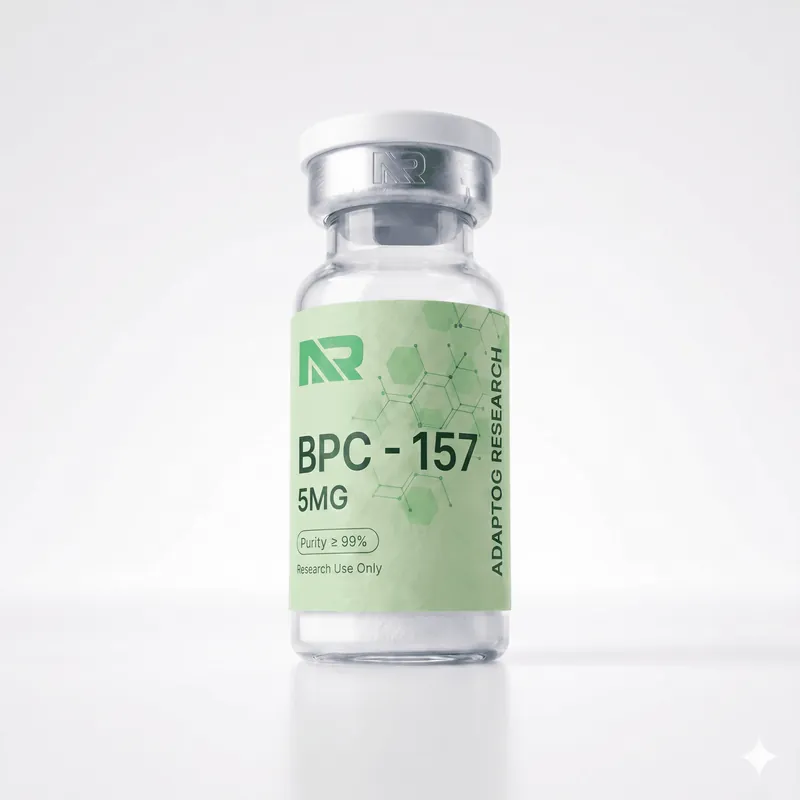
It is supplied as a lyophilised (freeze-dried) powder for laboratory research and must be reconstituted before use. UKPeptides releases BPC-157 at 99% HPLC-verified purity, with a batch-specific Certificate of Analysis available for every order.
Why BPC-157 is studied in research
In controlled in-vitro and pre-clinical models, BPC-157 is investigated for its role in several signalling pathways:
- Angiogenesis models — studied in vitro for VEGFR2 and nitric-oxide signalling associated with new blood-vessel formation.
- Cell-migration and tissue-repair assays — used to examine fibroblast and epithelial behaviour in wound-closure models.
- Cytoprotective signalling — investigated for its effect on cellular stress responses in tissue and organ models.
These are laboratory research applications only. BPC-157 is not a medicine and is not intended for human or veterinary use.
Why purity matters for reliable results
A peptide's behaviour in an assay is only as reliable as the material in the vial. Truncated sequences, deletion peptides and synthesis by-products can all skew results. That is why every batch should be verified by HPLC for purity and by mass spectrometry for identity — and why the Certificate of Analysis is the single most useful document for judging quality.
UKPeptides verifies every BPC-157 batch at an independent, accredited laboratory and ships the matching batch-specific COA, so the number on the certificate corresponds to the lot in your hands.
Handling and reconstitution
BPC-157 arrives lyophilised for stability. Before use in research it is reconstituted with a suitable sterile diluent — most commonly bacteriostatic water — using clean technique. A careful, repeatable method protects both the material and the reproducibility of your data. Our reconstitution guide walks through the technique step by step.
Store unmixed vials at -20°C; reconstituted solution should be kept at 2–8°C, protected from light, and used within a few weeks.
Sourcing BPC-157 in the UK
When choosing a UK supplier of research-grade BPC-157, look for:
- 99% HPLC purity, verified by an independent accredited lab
- A batch-specific COA for every order (HPLC chromatogram + mass-spec identity)
- Proper cold-chain handling and same-day UK dispatch
- Clear research-use-only labelling
UKPeptides supplies BPC-157 in 5 mg vials at 99% purity, with free cold-chain UK delivery and same-day dispatch before 3 pm GMT.
For research use only. This article is educational and does not describe human, clinical or veterinary use.
Written and reviewed to our editorial standards. Explore the research peptide catalog or read more in Research Notes.
For research use only · Not for human or veterinary use