Bacteriostatic water is the quiet workhorse of any peptide lab. Here is what makes it different from sterile water — and why that difference matters.
Almost every lyophilised peptide has to be dissolved in something before it can be used, and for most research work that something is bacteriostatic water. It is easy to overlook, but choosing the right diluent — and handling it correctly — has a direct effect on how long your reconstituted material stays usable.
What bacteriostatic water is
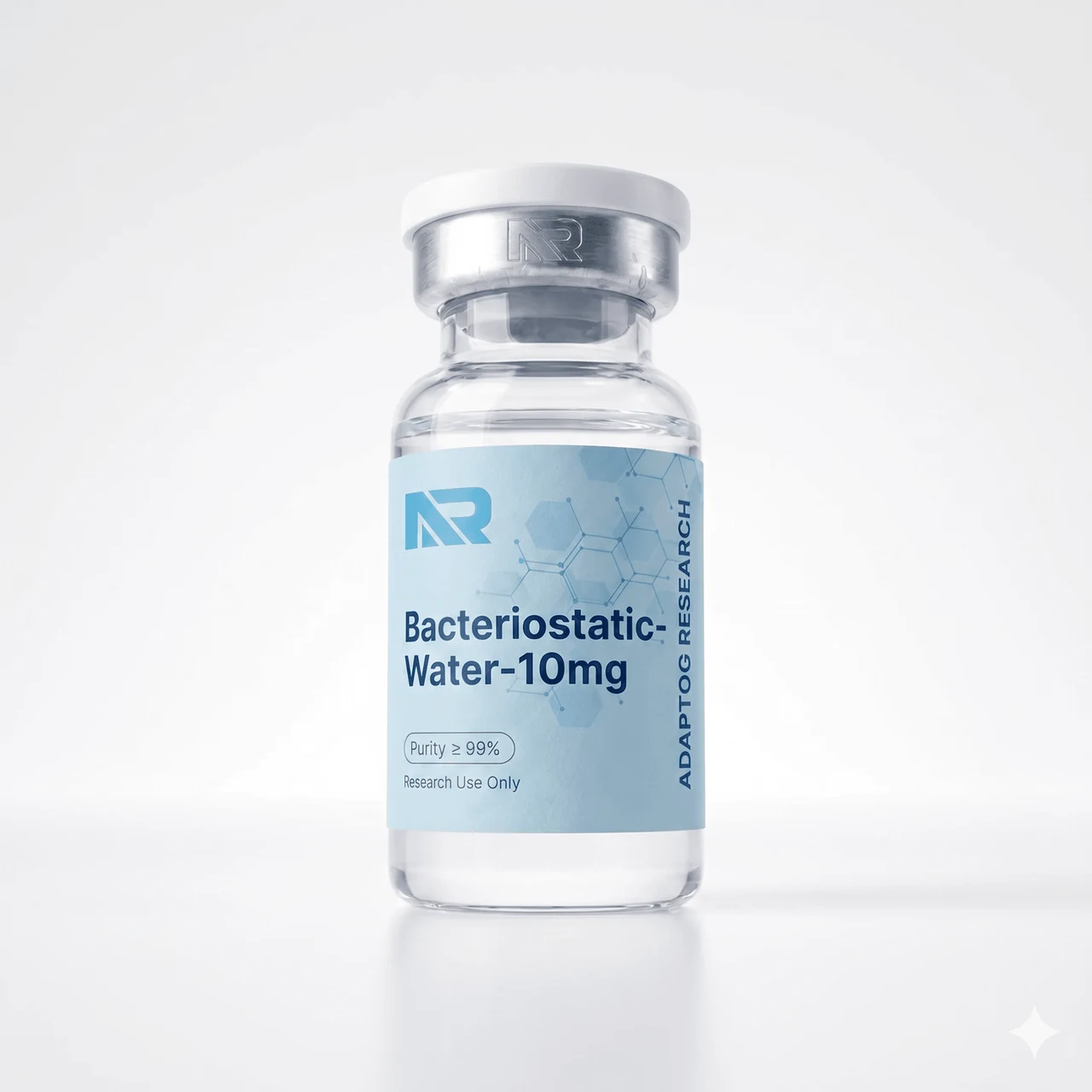
Bacteriostatic water is sterile water for injection that contains a small amount of a preservative — typically 0.9% benzyl alcohol. That preservative is what the name refers to: bacteriostatic means it inhibits the growth of bacteria rather than killing them outright. The result is a diluent that resists contamination across repeated entries into the same vial.
That last point is the practical one. A vial of plain sterile water is single-use; once the seal is broken there is nothing stopping microbial growth. Bacteriostatic water, by contrast, can be drawn from multiple times over a period of weeks, which is exactly how a peptide vial is used in practice.
Bacteriostatic vs sterile vs saline
- Sterile water for injection — no preservative, intended for a single use. Fine in a sealed single-draw scenario, but not ideal for a vial you will return to.
- Bacteriostatic water — preserved with benzyl alcohol; the default choice for most reconstitution because it tolerates multiple withdrawals.
- 0.9% sodium chloride (saline) — used where a peptide is more stable in an isotonic, salted solution, or where benzyl alcohol is unsuitable for the chemistry. Tesamorelin, for example, is commonly reconstituted with saline rather than bacteriostatic water.
The right choice depends on the peptide. A good product page or COA will note any solubility preference.
How it is used in reconstitution
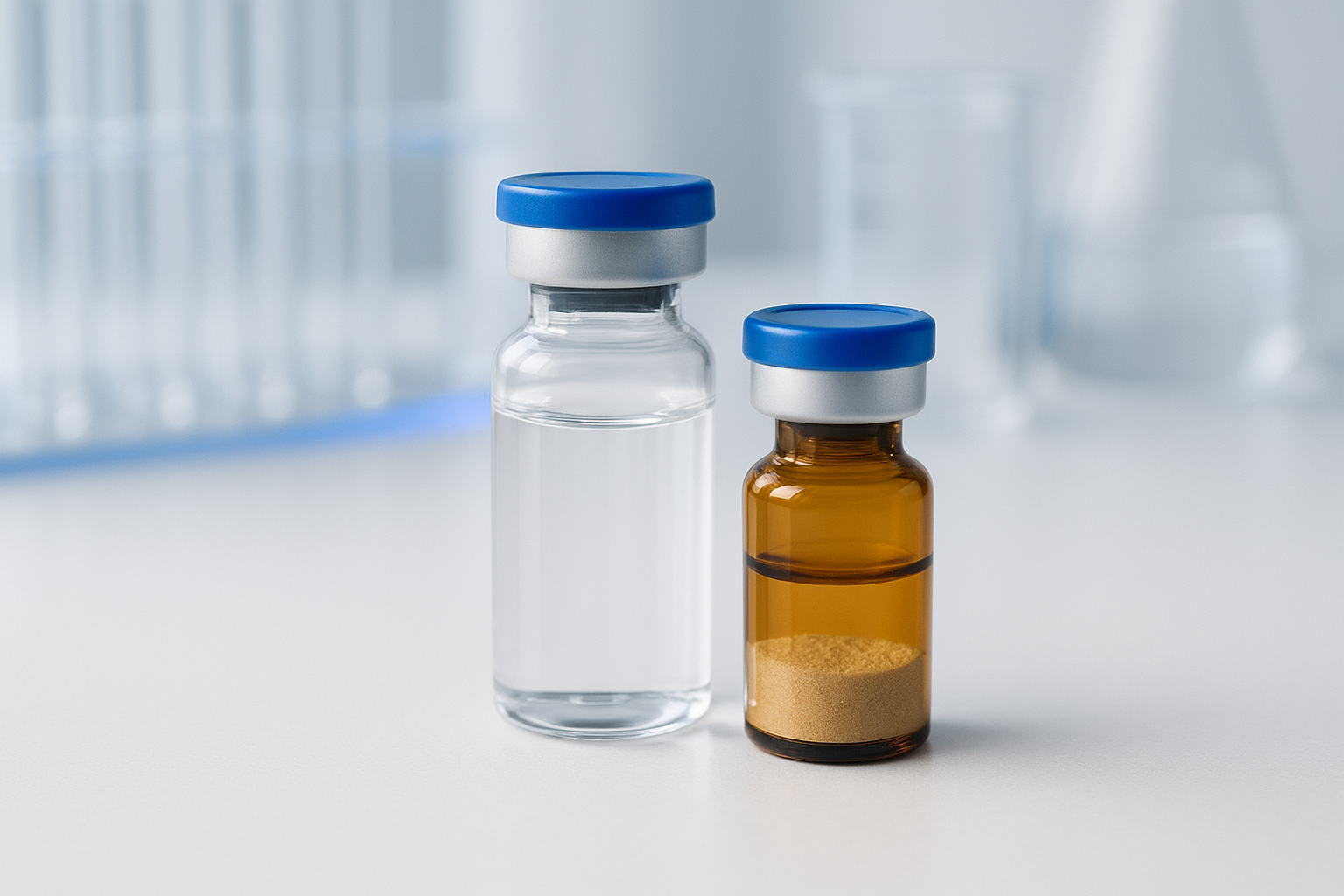
The technique is simple but worth doing properly: wipe both septa with an alcohol swab, draw the required volume of bacteriostatic water, and add it slowly down the side of the vial rather than blasting it onto the lyophilised cake. Then swirl gently until clear — never shake.
The volume you add sets the concentration. One milligram of peptide in one millilitre of water gives 1 mg/mL; the same milligram in two millilitres gives 0.5 mg/mL. Our peptide reconstitution calculator does this maths for you and shows how much peptide each drawn volume contains.
Shelf life once opened
Manufacturers generally label bacteriostatic water for use within 28 days of first puncture. The benzyl alcohol holds back contamination, but it is not indefinite — date the vial when you open it and discard it at the end of that window. Store it at room temperature, out of direct light.
Sourcing
We supply sealed, sterile bacteriostatic water alongside the peptide catalogue so a reconstitution-ready order can be placed in one go. It pairs with every lyophilised compound that calls for it.
For research use only. This article is educational and does not describe human, clinical or veterinary use.
Written and reviewed to our editorial standards. Explore the research peptide catalog or read more in Research Notes.
For research use only · Not for human or veterinary use